Helpful knowledge
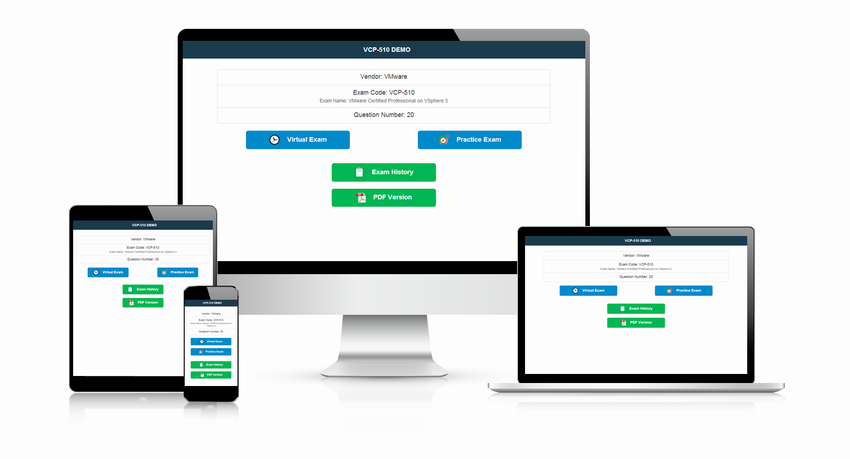
Our study material serves as a helpful companion for you with three kinds such as PDF & Software & APP version. All these versions are helpful and can fulfill your requirements. With clear layout and important exam points to remember, please spend 20 to 30 hours and you can pass the test like a piece of cake. The Upgrading Your Skills to MCSA: Windows Server 2016 (070-743 Deutsch Version) latest practice questions include not only the most important points of the requirements, but the newest changes and updates of test points. So many users with our 070-743 Deutsch : Upgrading Your Skills to MCSA: Windows Server 2016 (070-743 Deutsch Version) latest practice questions before passed them with the passing rate up to 95-100 percent, which made us irreplaceable and prominent among the peers, so you can totally trust us with confidence. Choosing our Upgrading Your Skills to MCSA: Windows Server 2016 (070-743 Deutsch Version) training study material is a smart choice to your way to success and the best way to save your time and money. In alliance with customers, we strive to fulfill your every single need and help you have a comfortable experience during the using process. Good luck.
Instant Download: Our system will send you the PassCollection 070-743 Deutsch braindumps file you purchase in mailbox in a minute after payment. (If not received within 12 hours, please contact us. Note: don't forget to check your spam.)
Free new updates
According to the new trend, experts said certificate obsession has been developed during the past ten years and continue to be an indispensable part to the workers, so experts have observed the changes and updates happened in this area frequently and add the new contents into the 070-743 Deutsch : Upgrading Your Skills to MCSA: Windows Server 2016 (070-743 Deutsch Version) test training pdf every year. Once you buy our Upgrading Your Skills to MCSA: Windows Server 2016 (070-743 Deutsch Version) exam study material, we send the new contents to you freely lasting for one year. Moreover, you do not need to spend vast amounts of time and money to possess our Upgrading Your Skills to MCSA: Windows Server 2016 (070-743 Deutsch Version) practice questions download at all, because all pdf material are inexpensive with quite suitable price.so it is an appropriate way of helping yourself to get to the success with our Upgrading Your Skills to MCSA: Windows Server 2016 (070-743 Deutsch Version) valid exam practice.
Leading reputation deserve being trusted
We never blindly follow suit and compiled our 070-743 Deutsch : Upgrading Your Skills to MCSA: Windows Server 2016 (070-743 Deutsch Version) exam study material with random knowledge. Their contents are sorted out by professional experts who dedicated in this area for many years. And we also treat the submissions from users carefully and adopt useful advice. A great majority of users are fascinated by the accuracy and efficiency of the Upgrading Your Skills to MCSA: Windows Server 2016 (070-743 Deutsch Version) valid exam practice that they make second purchase with confidence toward us. We gain the reputation by 070-743 Deutsch : Upgrading Your Skills to MCSA: Windows Server 2016 (070-743 Deutsch Version) valid exam practice and the 070-743 Deutsch latest practice questions in turn inspire us to do even better.
Schedule exam
Languages: English, Spanish, Chinese (Simplified), Chinese (Traditional), French, German, Japanese, Portuguese (Brazil)
Candidates for this exam are IT professionals who implement the Windows Server 2016 core infrastructure services.
Microsoft 70-743 Exam Syllabus Topics:
| Topic | Details |
|---|
| Implement High Availability | Implement high availability and disaster recovery options in Hyper-V
-Implement Hyper-V Replica; implement Live Migration including shared nothing Live Migration; configure CredSSP or Kerberos authentication protocol for Live Migration; implement storage migration Implement failover clustering
-Implement Workgroup, Single, and Multi Domain clusters; configure quorum; configure cluster networking; restore single node or cluster configuration; configure cluster storage; implement Cluster-Aware Updating; implement Cluster Operating System Rolling Upgrade; configure and optimize cluster shared volumes (CSVs); configure clusters without network names; implement Scale-Out File Server (SoFS); determine different scenarios for the use of SoFS vs. File Server for general use; determine usage scenarios for implementing guest clustering; implement a Clustered Storage Spaces solution using Shared SAS storage enclosures; implement Storage Replica; implement Cloud Witness; implement VM resiliency; implement shared VHDX as a storage solution for guest clusters Implement Storage Spaces Direct
-Determine scenario requirements for implementing Storage Spaces Direct; enable Storage Spaces Direct using Windows PowerShell; implement a disaggregated Storage Spaces Direct scenario; implement a hyper-converged Storage Spaces Direct scenario Manage failover clustering
-Configure role-specific settings, including continuously available shares; configure VM monitoring; configure failover and preference settings; implement stretch and site-aware failover clusters; enable and configure node fairness Manage VM movement in clustered nodes
-Perform live migration; perform quick migration; perform storage migration; import, export, and copy VMs; configure VM network health protection; configure drain on shutdown |
| Implement an Advanced Network Infrastructure | Implement high performance network solutions
-Implement NIC Teaming or the Switch Embedded Teaming (SET) solution and identify when to use each; enable and configure Receive Side Scaling (RSS); enable and configure network Quality of Service (QoS) with Data Center Bridging (DCB); enable and configure SMB Direct on Remote Direct Memory Access (RDMA) enabled network adapters; configure SMB Multichannel; enable and configure virtual Receive Side Scaling (vRSS) on a Virtual Machine Queue (VMQ) capable network adapter; enable and configure Virtual Machine Multi-Queue (VMMQ); enable and configure Single-Root I/O Virtualization (SR-IOV) on a supported network adapter Determine scenarios and requirements for implementing Software Defined Networking (SDN)
-Determine deployment scenarios and network requirements for deploying SDN; determine requirements and scenarios for implementing Hyper-V Network Virtualization (HNV) using Network Virtualization Generic Route Encapsulation (NVGRE) encapsulation or Virtual Extensible LAN (VXLAN) encapsulation; determine scenarios for implementation of Software Load Balancer (SLB) for North-South and East-West load balancing; determine implementation scenarios for various types of Windows Server Gateways, including L3, GRE, and S2S, and their use; determine requirements and scenarios for Datacenter firewall policies and network security groups |
| Implement identity federation and access solutions | Install and configure Active Directory Federation Services (AD FS)
-Upgrade and migrate previous AD FS workloads to Windows Server 2016; implement claims-based authentication, including Relying Party Trusts; configure authentication policies; configure multi-factor authentication; implement and configure device registration; integrate AD FS with Microsoft Passport; configure for use with Microsoft Azure and Office 365; configure AD FS to enable authentication of users stored in LDAP directories Implement Web Application Proxy (WAP)
-Install and configure WAP; implement WAP in pass-through mode; implement WAP as AD FS proxy; integrate WAP with AD FS; configure AD FS requirements; publish web apps via WAP; publish Remote Desktop Gateway applications; configure HTTP to HTTPS redirects; configure internal and external Fully Qualified Domain Names (FQDNs) |
| Implement Windows Containers | Deploy Windows containers
-Determine installation requirements and appropriate scenarios for Windows Containers; install and configure Windows Server container host in physical or virtualized environments; install and configure Windows Server container host; configure Docker start-up options; install a base container image; tag an image; remove a container; create Windows Server containers; create Hyper-V containers Manage Windows containers
-Manage Windows containers by using Docker CLI ; manage container networking; manage container data volumes; manage Resource Control; create new container images using Dockerfile; manage container images using DockerHub repository for public and private scenarios; manage container images using Microsoft Azure |
| Implement Domain Name System (DNS) | Install and configure DNS servers
-Determine DNS installation requirements; determine supported DNS deployment scenarios on Nano Server; install DNS; configure forwarders; configure Root Hints; configure delegation; implement DNS policies; Configure DNS Server settings using Windows PowerShell; configure Domain Name System Security Extensions (DNSSEC); configure DNS Socket Pool; configure cache locking; enable Response Rate Limiting; configure DNS-based Authentication of Named Entities (DANE); configure DNS logging; configure delegated administration; configure recursion settings; implement DNS performance tuning; configure global settings Implement and Maintain IP Address Management (IPAM)
-Provision IPAM manually or by using Group Policy; configure server discovery; create and manage IP blocks and ranges; monitor utilization of IP address space; migrate existing workloads to IPAM; configure IPAM database storage using SQL Server; determine scenarios for using IPAM with System Center Virtual Machine Manager for physical and virtual IP address space management; manage DHCP server properties using IPAM; configure DHCP scopes and options; configure DHCP policies and failover; manage DNS server properties using IPAM; manage DNS zones and records; manage DNS and DHCP servers in multiple Active Directory forests; delegate administration for DNS and DHCP using role-based access control (RBAC); audit the changes performed on the DNS and DHCP servers; audit the IPAM address usage trail; audit DHCP lease events and user logon events |
| Implement Hyper-V | Install and configure Hyper-V
-Determine hardware and compatibility requirements for installing Hyper-V; install Hyper-V; install management tools; upgrade from existing versions of Hyper-V; delegate virtual machine management; perform remote management of Hyper-V hosts; using Windows PowerShell Direct; implement nested virtualization Configure virtual machine (VM) settings
-Add or remove memory in a running VM; configure dynamic memory; configure Non-Uniform Memory Access (NUMA) support; configure smart paging; configure Resource Metering; manage Integration Services; create and configure Generation 1 and 2 VMs and determine appropriate usage scenarios; implement enhanced session mode; create Linux and FreeBSD VMs; install and configure Linux Integration Services (LIS); install and configure FreeBSD Integration Services (BIS); implement Secure Boot for Windows and Linux environments; move and convert VMs from previous versions of Hyper-V to Windows Server 2016 Hyper-V; export and import VMs; implement Discrete Device Assignment (DDA), Troubleshoot VM configuration versions Configure Hyper-V storage
-Create VHDs and VHDX files using Hyper-V Manager; create shared VHDX files; configure differencing disks; modify virtual hard disks; configure pass-through disks; resize a virtual hard disk; manage checkpoints; implement production checkpoints; implement a virtual Fibre Channel adapter; configure storage Quality of Service (QoS) Configure Hyper-V networking
-Add and remove virtual network interface cards (vNICs); configure Hyper-V virtual switches; optimize network performance; configure MAC addresses; configure network isolation; configure synthetic and legacy virtual network adapters; configure NIC teaming in VMs; configure virtual machine queue (VMQ); enable Remote Direct Memory Access (RDMA) on network adapters bound to a Hyper-V virtual switch using Switch Embedded Teaming (SET); configure Bandwidth Management |
| Implement Network Connectivity and Remote Access Solutions | Implement virtual private network (VPN) and DirectAccess solutions
-Implement remote access and site-to-site (S2S) VPN solutions using remote access gateway; configure different VPN protocol options; configure authentication options; configure VPN reconnect; create and configure connection profiles; determine when to use remote access VPN and site-to-site VPN and configure appropriate protocols; install and configure DirectAccess; implement server requirements; implement client configuration; troubleshoot DirectAccess |
| Install Windows Servers in Host and Compute Environments | Install, upgrade, and migrate servers and workloads
-Determine Windows Server 2016 installation requirements; determine appropriate Windows Server 2016 editions per workloads; install Windows Server 2016; install Windows Server 2016 features and roles; install and configure Windows Server Core; manage Windows Server Core installations using Windows PowerShell, command line, and remote management capabilities; implement Windows PowerShell Desired State Configuration (DSC) to install and maintain integrity of installed environments; perform upgrades and migrations of servers and core workloads from Windows Server 2008 and Windows Server 2012 to Windows Server 2016; determine the appropriate activation model for server installation, such as Automatic Virtual Machine Activation (AVMA), Key Management Service (KMS), and Active Directory-based Activation Create, manage, and maintain images for deployment
-Plan for Windows Server virtualization; assess virtualization workloads using the Microsoft Assessment and Planning (MAP) Toolkit; determine considerations for deploying workloads into virtualized environments; update images with patches, hotfixes, last cumulative updates and drivers; install roles and features in offline images; manage and maintain Windows Server Core, Nano Server images, and VHDs using Windows PowerShell |
| Install and Configure Active Directory Domain Services (AD DS) | Install and configure domain controllers
-Install a new forest; add or remove a domain controller from a domain; upgrade a domain controller; install AD DS on a Server Core installation; install a domain controller from Install from Media (IFM); resolve DNS SRV record registration issues; configure a global catalog server; transfer and seize operations master roles; install and configure a read-only domain controller (RODC); configure domain controller cloning |
| Implement Storage Solutions | Implement server storage
-Configure storage pools; implement simple, mirror, and parity storage layout options for disks or enclosures; expand storage pools; configure Tiered Storage; configure iSCSI target and initiator; configure iSNS; configure Datacenter Bridging (DCB); configure Multi-Path IO (MPIO); determine usage scenarios for Storage Replica; implement Storage Replica for server-to-server, cluster-to-cluster, and stretch cluster scenarios Implement data deduplication
-Implement and configure Deduplication; determine appropriate usage scenarios for Deduplication; monitor Deduplication; implement a backup and restore solution with Deduplication |
Reference: https://www.microsoft.com/en-us/learning/exam-70-743.aspx
Nowadays, with growing awareness about importance of specialized certificates and professional skills of knowledge increasing, people pay more and more attention to meaningful tests. Besides, work has plays a central role in our life and necessary certificates have become an integral part of workers requirements. So many bosses treat the certificates as extensions of your working ability. So it is our honor to help you gain the certificates you want to for such a long time by providing our useful 070-743 Deutsch : Upgrading Your Skills to MCSA: Windows Server 2016 (070-743 Deutsch Version) valid exam format, which is of great accuracy and efficiency. Now, let us take a succinct of the 070-743 Deutsch latest practice questions together.